
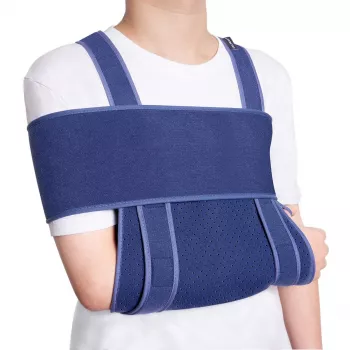
An adjustable arm and shoulder sling helps keep the arm supported while reducing strain on the shoulder and neck. With the right fit and setup, it can improve comfort during rest, walking, and light daily activities while promoting safer positioning during recovery. Whether you’re dealing with an injury, managing post-procedure restrictions, or simply needing short-term support to reduce fatigue, an adjustable sling can make day-to-day movement feel more manageable—especially when it’s easy to fine-tune throughout the day.
A sling is often used to help “rest” the arm and reduce stress on healing tissues. It’s not a replacement for medical evaluation or rehab guidance; it’s a positioning tool that works best when it fits correctly and matches the plan you were given.
If you’re unsure whether a sling is appropriate—or what position your elbow and wrist should be in—confirm with a clinician. For general guidance on injuries and treatment approaches, reputable resources like Mayo Clinic and MedlinePlus can be helpful starting points.
| Feature | Why it helps | When it’s especially useful |
|---|---|---|
| Adjustable shoulder strap | Fine-tunes arm height and reduces shoulder tugging | Swelling changes, long wear periods |
| Padded strap section | Improves comfort and reduces skin irritation | Sensitive skin, heavier arm support needs |
| Breathable fabric | Helps reduce heat and moisture build-up | Warm climates, indoor heating, extended wear |
| Wrist/hand support area | Prevents hand droop and fatigue | Wrist soreness, long walks or standing |
| Quick-adjust hardware | Makes fit changes easier without fully removing the sling | Commuting, bathroom breaks, meal prep |
A practical “comfort check” after a few minutes of walking: your shoulder should feel supported rather than pulled down, your neck should not feel pinched by the strap, and your hand should not feel like it’s dangling. Small adjustments can make a big difference—especially later in the day when swelling and fatigue can change how the sling sits.
The Adjustable Arm and Shoulder Sling is a ready-to-use option for supportive positioning during recovery or short-term comfort needs. It’s designed for fit changes throughout the day, helping you maintain a supported arm position while reducing shoulder strain from unsupported weight.
| Item | Details |
|---|---|
| Product | Adjustable Arm and Shoulder Sling |
| Price | 50.95 USD |
| Availability | In stock |
| Product page | https://awesomeoffersplanet.shop/adjustable-arm-and-shoulder-sling/ |
It should feel snug enough to support the forearm without cutting into the neck or shoulder. Fingers should stay warm with normal color and sensation, with no numbness or tingling.
Wear time depends on the injury and the schedule provided by your clinician. Follow the prescribed plan and remove the sling only when you’ve been told it’s okay (such as for bathing or specific exercises).
The elbow should sit fully back in the pouch, the wrist should stay neutral (not bent down), and the hand should be supported. In some cases, the hand may be positioned slightly higher than the elbow to help with swelling, based on clinician guidance.











Leave a comment