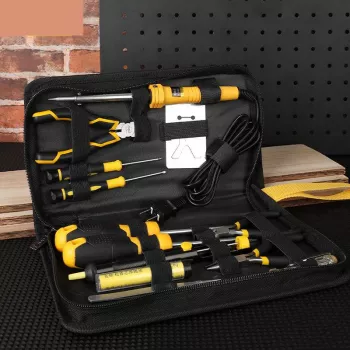
A compact electrician tool set can reduce trips back to the toolbox and help keep common wiring tasks consistent and safer. A well-chosen 13-piece kit is designed to cover routine cutting, stripping, gripping, and driving—without weighing down a drawer, cart, or service bag. Below is a practical breakdown of what these sets typically handle, how to spot solid hand-tool quality, and how to match a kit to home, maintenance, or light professional use.
A 13-piece electrician tool set is built for the “daily drivers” of electrical work—especially jobs where the goal is reliable handling of conductors and fasteners rather than specialty installation or diagnostics.
While the exact mix varies by brand, a compact set usually covers four categories: cutting, stripping, gripping, and driving—plus a handful of accessories that keep small jobs moving.
Most kits include diagonal/side cutters for trimming copper wire, zip ties, and small fasteners. If you regularly handle larger-gauge conductors, note that dedicated cable shears are often a separate tool.
A wire stripper sized for common AWG ranges is the centerpiece of many kits. Clean stripping matters: nicked conductors can weaken the wire and create failure points, especially when a connection is flexed during device installation.
Needle-nose pliers help with positioning leads, forming loops, and guiding wires into crowded boxes. Lineman’s pliers add leverage for twisting splices and pulling conductors into place when you need more strength than needle-nose can provide.
Screwdrivers or a bit driver handle device screws, cover plates, and terminal clamps. Tip fit is a big deal: a driver that seats well reduces cam-out, preserves screw heads, and helps keep torque steady.
Common add-ons include electrical tape, ties, and a small knife or deburring tool. Storage matters too—some sets come in a pouch/case that keeps edges protected and prevents loose tools from turning into a tangled drawer.
Designed as a single-kit solution for routine wiring and fastening tasks, a 13-piece set works well as a primary home kit or as a supplemental set kept in a vehicle, kitchen drawer, or maintenance cart. For safer workflows, pair it with a separate tester and basic lockout/tagout supplies.
| Item | Details |
|---|---|
| Product | 13 Pcs Electrician Tool Set |
| Price | 83.49 USD |
| Availability | In stock |
| Product page | https://awesomeoffersplanet.shop/13-pcs-electrician-tool-set/ |
Two kits can look similar at a glance, but they won’t feel the same on the hundredth cut or the fiftieth outlet swap. These checkpoints help separate a “works for now” set from one you’ll keep reaching for.
Choosing the right 13-piece set comes down to what you do most often—and what you need the kit to do without improvising.
For additional safety guidance, refer to OSHA Electrical Safety-Related Work Practices (29 CFR 1910 Subpart S) and NFPA 70E for workplace electrical safety practices.
If your kit supports recurring maintenance, the paperwork can become its own mess—warranty cards, circuit notes, appliance manuals, and labeled diagrams. A lightweight organizer like the 10PCS A4 Hanging File Folder – Colorful Portable Document Organizer can help separate room-by-room notes or job tickets so the tool set stays focused on the work, not the clutter.
Yes—these kits typically cover common tasks like swapping outlets and switches and basic fixture wiring when they include a good stripper, cutters, and pliers. Add a voltage tester and verify power is off before handling conductors.
For de-energized work, standard tools are commonly used, but any chance of contact with energized parts calls for properly rated insulated tools and strict safety procedures. Always verify circuits are off before touching wiring.
Add a non-contact voltage tester, a multimeter (or clamp meter), spare batteries for testers, and a small organizer for wire connectors and labels. These items help you confirm conditions rather than guessing.













Leave a comment