Back to menu
HomeBlogBlog7500RPM Trimmer/Shaver for Men: Clean Lines, Less Tug

7500RPM Trimmer/Shaver for Men: Clean Lines, Less Tug

7500RPM Trimmer/Shaver for Men: Clean Lines, Less Tug

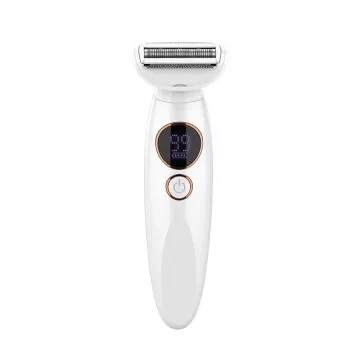
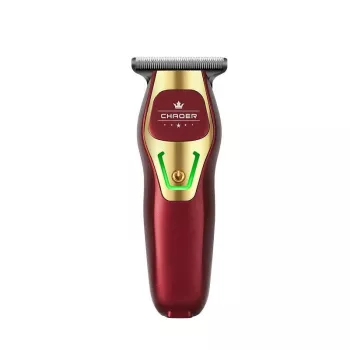
Professional 7500RPM Electric Hair Trimmer and Shaver for Men

A fast-motor trimmer and shaver combination can make grooming more consistent—clean outlines, quick bulk removal, and smoother finishing passes. A 7500RPM motor changes the feel of each stroke by keeping cutting power steadier as you move through different densities of hair. The result is typically less back-and-forth, cleaner edges, and fewer moments where the tool seems to “catch” on thicker patches—especially when blades are clean and technique is controlled.

What a 7500RPM motor changes during grooming

Motor speed isn’t the only factor in performance, but it’s a practical one. A 7500RPM trimmer/shaver is built to keep the blade moving quickly, which can translate into smoother progress and more predictable results.

  • Faster cutting action: Helps reduce repeated passes when removing bulk, which can matter for dense beards or fast cleanup before heading out.
  • More consistent power across the face: Thick areas like the jawline and chin often resist cutting more than cheeks or the upper neck; steadier speed helps maintain an even finish as you transition.
  • Less tugging when maintained: A quick motor paired with clean, aligned blades tends to glide better; buildup and misalignment are common causes of pulling.

Trimmer vs. shaver: choosing the right mode for the result

Getting the look you want is often about sequencing. Use the trimmer for structure and length control, then switch to the shaver for refinement.

  • Trimmer mode: Best for shaping beards, edging hairlines, and reducing length before going closer. It’s the “construction phase” for lines and symmetry.
  • Shaver mode: Best for a cleaner finish after trimming, especially on cheeks and the neckline where a crisp edge sells the whole look.
  • Longer growth: Start by trimming. Shaving works best after hair is shortened; this lowers snagging and helps the shaver finish evenly.
  • Sensitive skin: Prioritize fewer passes and a lighter touch. Pressing harder can increase friction and irritation without meaningfully improving closeness.

For irritation-prone areas, basic dermatology guidance—like softening hair, using gentle pressure, and limiting repeated strokes—can make a noticeable difference (see the American Academy of Dermatology Association’s shaving tips).

Best-use routines for common grooming goals

Beard cleanup (fast, sharp, low hassle)

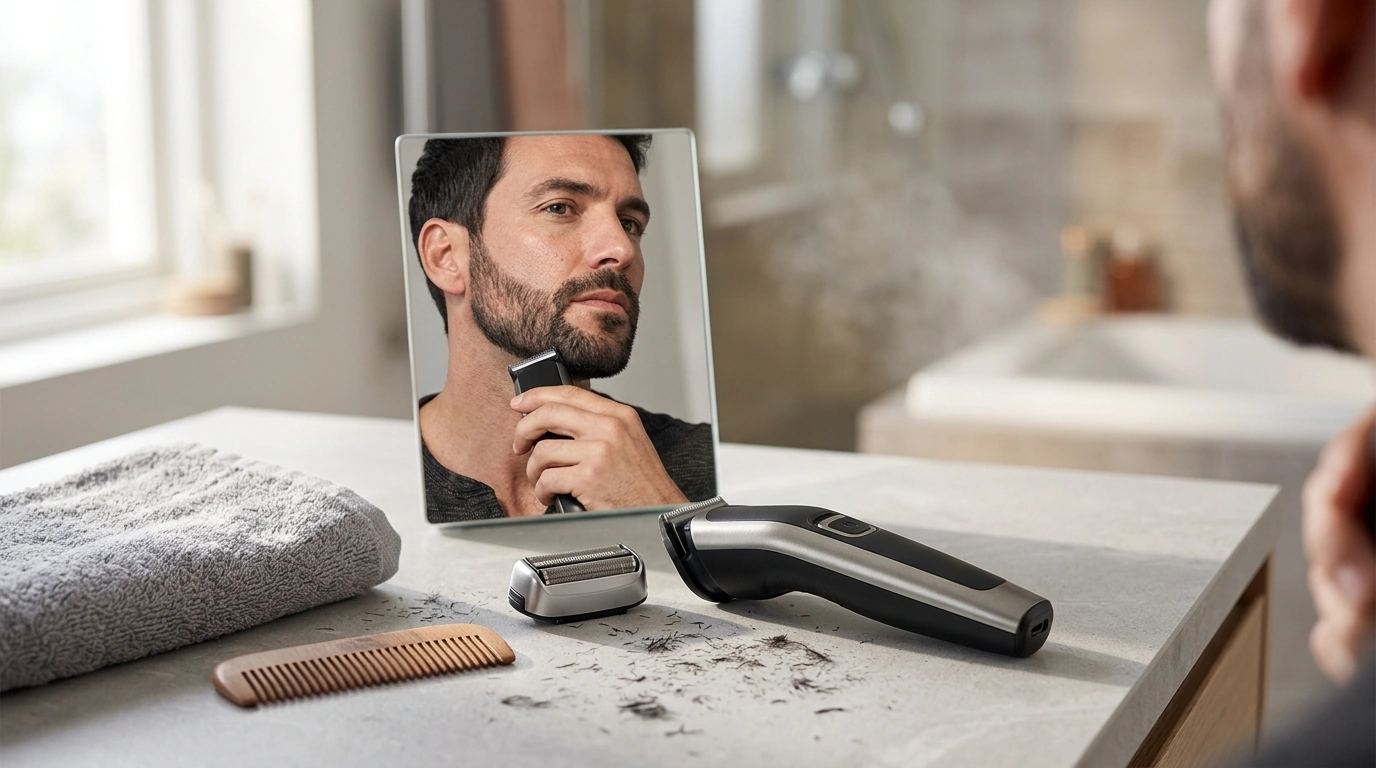
Trim first to remove bulk and re-establish shape. Edge cheek and neck lines with short, controlled strokes. Finish with the shaver to tighten the outline and clean up strays for a sharper final look.

Head and hairline detailing

For edging around temples, ears, and the back of the neck, work slowly against the direction of growth. Use short strokes to stay precise, and check symmetry often in good lighting.

Body touch-ups

Keep skin taut and move in controlled strokes. If irritation starts, stop and resume later rather than forcing closeness in one session—especially in high-friction zones.

Quick maintenance between cuts

Instead of doing a full trim, focus on the neckline, sideburns, and mustache outline. Five minutes of targeted cleanup can make overall grooming look intentional and refreshed.

Technique tips for a cleaner cut with less irritation

  • Prep matters: Wash and fully dry hair/beard before trimming for more even cutting and less pulling.
  • Use light pressure: Let the motor do the work. Pressing harder can flatten hair, create uneven lines, and irritate skin.
  • Short, overlapping strokes for detail: Especially for edging and corners. Save longer strokes for flatter areas where you can keep angle consistent.
  • Neckline approach: Go with the grain first. If skin tolerates it, refine carefully across the grain rather than repeatedly scraping the same strip.
  • If bumps are common: Avoid going “too close” where hair curls back into skin; razor bumps (pseudofolliculitis barbae) are often made worse by aggressive closeness and repeated passes (overview from Mayo Clinic).

Cleaning and maintenance that preserves performance

Fast motors perform best when airflow and blade movement aren’t blocked by trapped hair. A simple routine helps keep cutting consistent and reduces heat and tugging.

  • After every use: Remove trapped hair from cutting areas. Buildup can increase noise, heat, and pulling.
  • Keep cutting parts dry: Moisture can encourage corrosion and rough movement over time.
  • Oil when supported: A small amount occasionally can reduce friction and extend blade life.
  • Inspect periodically: Misalignment, dullness, or tiny nicks commonly cause patchy results and discomfort.
  • Store smart: Keep the tool in a clean, dry place; avoid leaving it in a humid bathroom if possible.

Professional 7500RPM trimmer/shaver: quick specs at a glance

Specs summary

Item Details
Product name Professional 7500RPM Electric Hair Trimmer and Shaver for Men
Motor speed 7500RPM
Type Electric hair trimmer + shaver
Availability In stock
Price $51.67 USD

Who it suits best

Where to buy

Shop the Professional 7500RPM Electric Hair Trimmer and Shaver for Men and confirm current pricing and availability before ordering. For sensitive skin, plan a gentle routine: fewer passes, clean blades, and calm aftercare.

FAQ

What does 7500RPM mean on a hair trimmer?

RPM refers to motor speed—how fast the motor drives the cutting action. Higher RPM can help maintain cutting consistency and reduce tugging when blades are clean, sharp, and properly aligned, though technique and maintenance still play a big role.

Should a beard be trimmed or shaved first?

Trim first to remove length and bulk, then shave (or use the shaver side) to finish closer. This order reduces snagging and makes it easier to create cleaner, more controlled lines.

How often should trimmer blades be cleaned?

Remove hair after every use, then do a deeper clean periodically depending on how often you groom. Buildup commonly causes pulling, extra heat, and uneven cutting.

Was this article helpful?

Yes No
Leave a comment
Top

Shopping cart

×