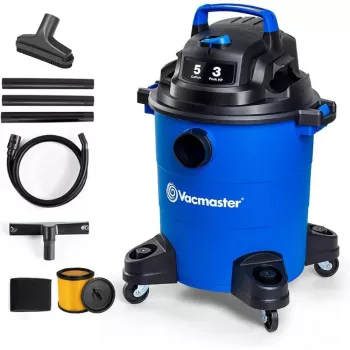
A compact wet/dry shop vacuum is one of those tools that earns its keep fast—especially when you want real pickup power without dedicating a big chunk of shelf space to a full-size canister. A 5-gallon tank hits a practical sweet spot for everyday garage messes, light workshop debris, and quick vehicle cleanups, while still being capable of handling small liquid spills when set up correctly. Add a built-in blower mode and a 10-foot cord, and cleanup stays efficient with fewer pauses to move to a new outlet or switch tools.
This size class is built for routine messes—often the kind that happen repeatedly and need a fast, reliable solution. The tank is large enough to avoid constant emptying, but small enough to carry, store, and maneuver around tight spots.
For general jobsite safety guidance—especially around dust and electrical tools—review applicable recommendations from OSHA and electrical safety resources from the NFPA.
The headline specs matter, but day-to-day convenience is what makes a shop vacuum easy to grab instead of easy to ignore. These are the features that typically have the biggest impact in garages, small shops, and home storage areas.
| Task | Helpful feature | Why it matters |
|---|---|---|
| Car interior cleanup | Compact 5-gallon body | Easier to move around seats and door openings |
| Sawdust and shop mess | Strong suction | Improves pickup on floors, corners, and around tools |
| Small water spills | Wet pickup capability | Handles liquid cleanup when set up for wet use |
| Clearing leaves and dust | Blower mode | Pushes debris out of cracks and off surfaces |
| Cleaning multiple spots | 10-foot cord | Less time unplugging and replugging |
Wet/dry versatility is a big advantage, but it also means setup matters. A few habits go a long way toward protecting the vacuum, your workspace, and the people using it.
Most “loss of suction” complaints come down to airflow restrictions or leaks. Keeping the airflow path open and the seals tight will usually bring performance back quickly.
Yes—when it’s configured for wet pickup. Use the correct filter setup for liquids (or remove the dry filter if required), and empty/rinse the tank after use to prevent odor and buildup.
Blower mode reverses airflow to push debris away instead of pulling it in. It’s helpful for clearing leaves, pushing dust out of corners, and cleaning cracks where suction is awkward.
Clean or replace the filter, check the hose and nozzle for clogs, confirm the lid is sealed properly, and empty the tank if it’s near full. Most suction issues come from restricted airflow or leaks at the seal.











Leave a comment