A heated gua sha tool blends the familiar glide of gua sha-style strokes with gentle, controlled warmth. The result is a more soothing, spa-like feel that fits easily into an evening wind-down, a post-shower body routine, or a quick reset after long hours at a desk. Used with a good “slip” product and light-to-moderate pressure, it can support relaxation and help tight-feeling areas feel more comfortable—without trying to replace professional care.
What a Heated Gua Sha Tool Does
Classic gua sha techniques focus on smooth, repeated strokes across the skin. A heated version keeps that same approach but adds warmth for a softer, more comfortable experience—especially on areas that tend to feel tense.
- Pairs gua sha-style gliding strokes with controlled warmth for a cozier, more “treat yourself” feel.
- Can feel less “grabby” than a cold tool when used with facial oil, serum, or body oil.
- Commonly used on the face and neck, plus shoulders, arms, lower back, hips, thighs, calves, and feet (based on comfort and tool shape).
- Works best as a comfort-forward self-care tool—not as a medical treatment for disease, injury, or pain with unknown causes.
For a helpful overview of how gua sha is generally used and what it may (and may not) do, see Cleveland Clinic’s guide to gua sha.
Why Add Heat to Gua Sha
Heat changes the “tone” of the routine. Instead of brisk strokes and quick passes, warmth tends to encourage slower, lighter massage that still feels satisfying.
- Warmth feels relaxing and may help tissues feel more pliable before or during massage strokes.
- Can be a welcome addition after travel stiffness, workouts, desk work, or long periods of standing.
- Makes it easier to use fewer passes with lighter pressure (often a better approach for facial skin).
- Not ideal with active inflammation, recent injury, or heat sensitivity—when uncertain, lower the heat or skip it.
General guidance on safe heat use and when to avoid it is also covered by Mayo Clinic’s overview of heat therapy.
Heated vs. Non-Heated Gua Sha: Quick Comparison
| Feature |
Heated tool |
Non-heated stone/tool |
| Sensation |
Warm, soothing, spa-like |
Cool/neutral depending on material |
| Best for |
Comfort-focused massage, tight-feeling areas |
De-puffing feel, quick cooling effect |
| Prep needed |
Power/charge + temperature check |
Clean + apply slip product |
| Control |
May include heat levels and timers |
Primarily controlled by hand technique |
| When to avoid |
Heat sensitivity, recent bruising, certain skin conditions |
Fewer heat-related limits, but still avoid broken skin |
How to Use It: Simple Routine for Face and Body
The best results come from a gentle, consistent routine that prioritizes glide, comfort, and a sensible temperature.
- Start with clean skin and apply enough slip (facial oil, lightweight moisturizer, or body oil) to prevent tugging.
- Set heat to low or a comfortable level; test on the inner wrist before using on the face or neck.
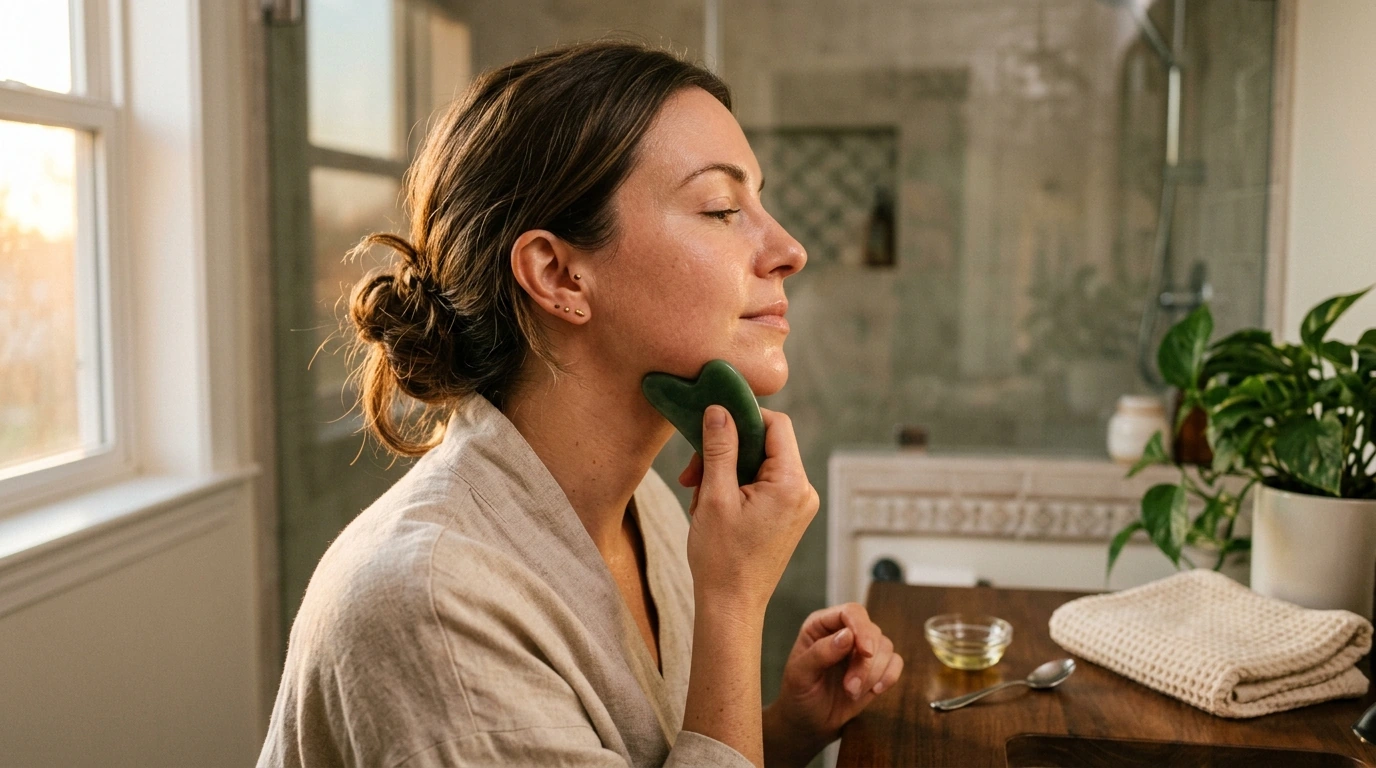
- Use light pressure on the face: glide from the center outward along the jawline and cheeks; sweep from brows toward temples with slow, even passes.
- For neck: use gentle outward strokes and avoid direct pressure over the front of the throat.
- For shoulders and legs: use medium-light pressure and long strokes toward the heart; reduce pressure over bony areas.
- Timing: about 3–5 minutes for the face, 5–10 minutes for body zones. Stop if you feel pain, irritation, or see excessive redness.
- Finish by wiping off excess product if needed and cleaning the tool (especially around edges and seams).
If skin is easily irritated, keeping routines simple helps. The American Academy of Dermatology’s skin care basics is a solid reference for building gentler habits.
Pressure, Angles, and Common Mistakes
Small technique changes make a big difference—especially when heat is involved.
- Keep it low and flat: Hold the tool closer to flat against the skin (about 10–30 degrees) for smoother gliding and less pulling.
- Massage pressure, not scraping: The goal is “ahh,” not “ow.” Bruising, sharp pain, or lingering tenderness usually means pressure or frequency is too high.
- Never dry scrape: Always use a lubricant to reduce friction and micro-irritation, particularly with warmth.
- Skip compromised skin: Avoid broken skin, active acne lesions, sunburn, rashes, or recent cosmetic procedures unless cleared by a licensed professional.
- Adjust for flushing-prone skin: If prone to redness or rosacea-like sensitivity, use lower heat, fewer passes, and shorter sessions.
Care, Cleaning, and Safe Use
Regular cleaning keeps edges hygienic and helps the device stay reliable over time.
Who It’s Best For (and When to Avoid)
Shop Tools and Everyday Essentials
FAQ
How often can a heated gua sha tool be used?
For the face, many people do well with 3–5 sessions per week using light pressure and short timing. For the body, it can be used as tolerated, but it’s smart to start with a few sessions weekly and adjust based on redness, tenderness, or irritation.
Can it be used on the neck and jawline safely?
Yes, with gentle pressure and low heat—glide outward and avoid pressing on the front of the throat. Stop immediately if you feel dizziness, throbbing discomfort, or unusual sensitivity.
What should be applied before using a heated gua sha tool?
Apply a slip product like facial oil, serum, moisturizer, or body oil so the tool glides without tugging. Avoid strong actives right before heat if you’re sensitive, and patch test new products to reduce the chance of irritation.
Recommended for you











Leave a comment