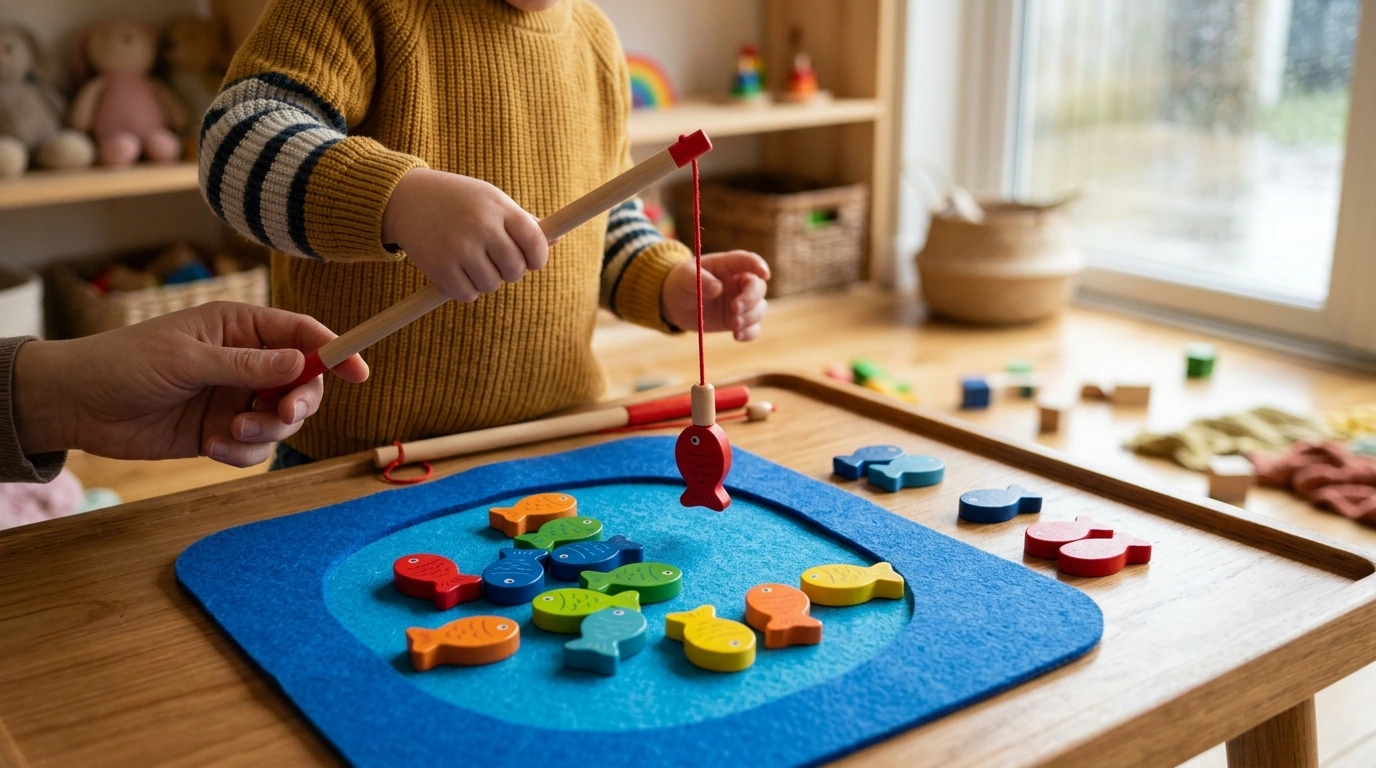
A magnetic fishing game turns classic pretend play into an engaging activity that builds coordination, patience, and problem-solving. With easy-to-grip rods and colorful pieces, it works for solo play, siblings, playdates, classrooms, and rainy-day entertainment—while giving caregivers simple ways to adapt the challenge as kids grow.
There’s something instantly satisfying about “catching” a fish with a magnet. That quick success loop keeps kids trying again, and it naturally supports skill building without feeling like a lesson.
A simple checklist helps compare sets by the details that affect day-to-day play, cleanup, and durability. Look for clear information on piece size, materials, magnet strength, and how the play surface is designed (flat board, pond mat, or bowl-style).
| Feature | Why it matters | What to look for |
|---|---|---|
| Piece size | Helps prevent choking hazards and makes grabbing easier | Larger pieces for younger kids; smooth edges; no loose small parts for under-3 |
| Magnet strength | Determines how frustrating or satisfying play feels | Secure connection that still requires control, not so strong it snaps pieces together roughly |
| Rod design | Affects grip, fatigue, and fine-motor practice | Comfortable handle, durable string/cord, attachment that won’t fray quickly |
| Materials & finish | Impacts safety and longevity | Non-toxic finishes, sturdy construction, easy-to-clean surfaces |
| Storage | Reduces lost pieces and cleanup battles | Built-in box, bag, or compartmentalized tray |
One of the best parts of magnetic fishing is how easily the same set grows with your child. Start simple, then add tiny twists that turn “just fishing” into a whole new game.
Magnetic fishing looks like pure play, but it quietly supports a wide range of early skills—especially for kids who learn best by moving and doing.
Like any toy with small components and magnets, a few simple habits help keep play safe and stress-free. For broader toy guidance, review the American Academy of Pediatrics toy safety tips and the U.S. Consumer Product Safety Commission toy safety resources.
Different ages and group sizes call for different setups. A good match keeps the challenge “just right,” so kids stay motivated rather than overwhelmed.
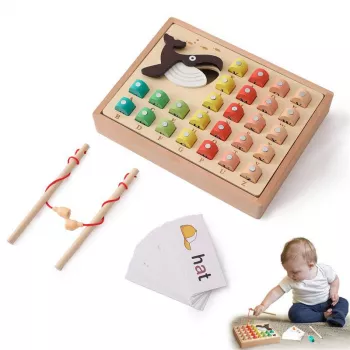
If you’re ready to add this classic, skill-building game to your play rotation, the Magnetic Fishing Toy Set is a ready-to-play option designed for interactive, hands-on fun. It works well for independent play or turn-based rounds with siblings and friends, and it’s easy to refresh over time by rotating in structured challenges (color calls, counting points, or quick timed rounds).
For families and educators who like to keep simple “challenge cards,” score sheets, or category lists on hand, the 10PCS A4 Hanging File Folder – Colorful Portable Document Organizer can be a practical way to stash paper-based add-ons neatly, especially in classroom or therapy settings where activities rotate daily.
Most sets work best for toddlers through early elementary ages, depending on piece size and rule complexity. Younger kids do best with larger pieces and close supervision, while preschoolers can typically handle sorting, counting, and simple rule-based rounds.
They can be safe when you choose age-appropriate parts, supervise young children, and regularly check for loose magnets or frayed cords. Keep magnets away from mouths and discard any damaged pieces promptly.
Try timed rounds, “catch only red” (or only numbers) target rules, simple point systems, or one-hand fishing. You can also add cooperative roles where one player calls the target and the other fishes, then switch.











Leave a comment