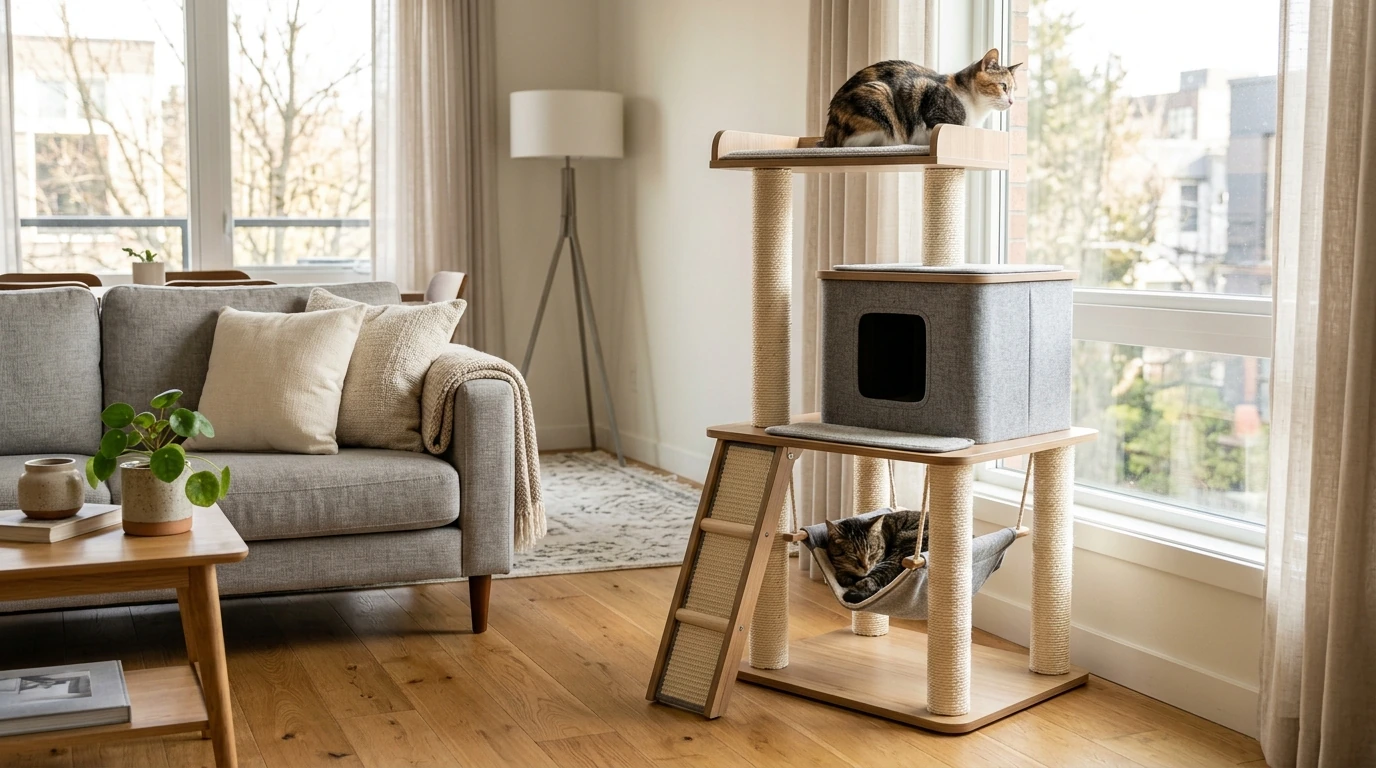
A good cat tree does more than add vertical space—it gives cats a place to climb, scratch, nap, and feel secure while keeping furniture safer from claws. This modern multi-level design combines a cozy condo for hiding, a hammock for lounging, and multiple scratching posts for daily claw care, all in a compact footprint that works well in apartments and living rooms. For more guidance, see Cat Tree.
Cats experience a room in layers. When they can move up, down, and across levels, everyday routines become more active and more calming—often at the same time. A thoughtfully built cat tree supports both “busy cat” energy and quiet downtime. For further reading, see Cat Trees & Condos.
For a deeper look at what cats need from their environment—like appropriate resting spaces, hiding options, and enrichment—see the American Association of Feline Practitioners (AAFP) Environmental Needs Guidelines.
This style of cat tree is designed to cover several daily needs in one compact setup: play, rest, scratching, and observation. That matters in smaller homes where adding multiple pet items can feel cluttered.
| Feature | What cats use it for | Why it helps at home |
|---|---|---|
| Condo (enclosed space) | Hiding, sleeping, decompressing | Gives cats a dedicated safe zone; can reduce stress and conflicts |
| Hammock (suspended bed) | Lounging, dozing, relaxing in a curve | Offers a favorite nap spot that’s off the floor and away from foot traffic |
| Scratching posts | Claw care, stretching, marking territory | Channels scratching to an appropriate surface; protects upholstery |
| Multiple platforms | Climbing, perching, watching | Adds vertical enrichment without needing more floor space |
Placement can be the difference between “best seat in the house” and “nice but ignored.” Cats tend to return to spots that feel safe, offer a good view, and sit near the household’s daily rhythm.
If your cat is currently scratching a specific furniture edge, placing the tree close to that “hotspot” helps make the new scratching surface the obvious choice. The ASPCA’s overview of cat scratching behavior also notes that appropriate scratchers and smart placement are key to redirecting the habit.
Not every cat uses a tree the same way. Some treat it like a jungle gym; others want one safe cave and a single high lookout. Match the structure to your cat’s mobility and personality for better, faster adoption.
A cat tree should feel sturdy enough that your cat can launch, land, and stretch without a wobble. Stability builds confidence—especially for cautious cats and heavier jumpers.
Start by placing treats or a small portion of a meal on different levels, then add familiar bedding to the condo or hammock so it smells like home. For shy cats, keep the tree in a calm, frequently used room and reward any gentle exploration.
Yes—when the posts are close to the problem area, sturdy under pressure, and tall enough for a full stretch. Keep the scratching surface appealing (not worn through), and reinforce use with praise or a small treat right after your cat scratches there.
Place it near a window or the main living area so your cat gets a view and stays close to household activity. Avoid tight hallways, and use a non-slip mat on smooth floors to improve stability and confidence.











Leave a comment