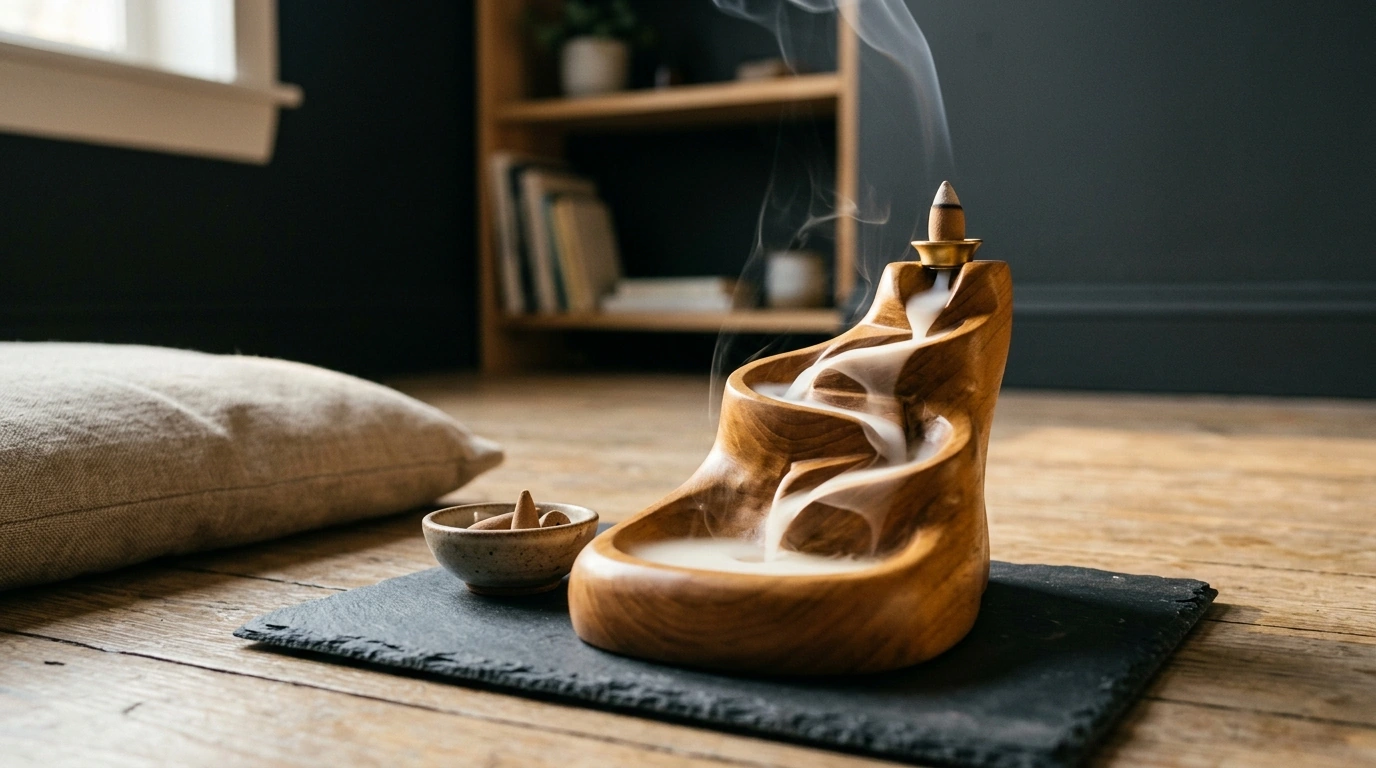
A sandalwood backflow incense burner creates a calm, cascading smoke effect that resembles mountain mist flowing through an alpine stream. Designed for aromatherapy rituals, meditation corners, and relaxing evening routines, this style of burner combines natural-looking decor with a slow, visually soothing fragrance release. When set up correctly, the “flowing water” smoke path becomes a centerpiece that’s equal parts atmosphere and quiet ritual.
Unlike standard incense holders that let smoke drift upward immediately, a backflow setup is made to pull smoke down through the burner before it disperses into the room. That single design difference changes both the look and the feel of your burn session.
The “alpine” look tends to feel grounded and clean—like a quiet cabin moment rather than flashy decor. A sandalwood finish fits naturally into that mood, especially when paired with simple textures and warm lighting.
If you’re styling a nightstand, entry console, or meditation nook, keep the immediate area uncluttered. The cascade reads best when the eye has room to follow the “stream” from top to bottom.
Backflow burners are easy to use, but they’re a little more sensitive to setup than a basic incense dish. A stable surface and correct cone placement are what make the waterfall effect look smooth rather than patchy.
| Step | Why it matters |
|---|---|
| Level surface | Prevents uneven smoke paths and tipping risk |
| Low-draft location | Maintains the waterfall effect |
| Backflow cone only | Enables downward smoke travel |
| Cone aligned with inlet | Feeds smoke into internal channel |
| Heat-safe base/tray | Protects furniture and catches residue |
Choosing a cone scent is like choosing background music: it sets the tone, but it shouldn’t drown out the room. Backflow burning can feel a bit more concentrated near the burner, so it’s often best to start lighter and adjust.
For readers interested in how aromatherapy is commonly used in relaxation routines, the Cleveland Clinic offers a helpful overview of aromatherapy benefits and considerations: Cleveland Clinic – Aromatherapy.
For general indoor air guidance, review practical ventilation considerations from EPA – Indoor Air Quality. For open-flame and ember safety principles that apply to many home fragrance routines, see NFPA – Candle Safety.
If you want the waterfall effect as part of your daily reset, Sandalwood Backflow Incense Burner – Alpine Flowing Water Aromatherapy is a decor-forward aromatherapy piece designed to showcase a flowing backflow smoke cascade. It works best as a focal point for a meditation nook, bedside routine, or quiet reading corner, and it pairs naturally with warm, wood-toned interiors and nature-inspired styling. Use with compatible backflow cones and a stable, draft-free setup for the most consistent effect.
No. Backflow burners require specially made backflow cones with a hollow core so smoke can travel downward; standard cones usually won’t create the waterfall effect.
Common causes include drafts, a cone that isn’t centered over the inlet, residue clogging the channel, or an uneven surface. Also give it 1–2 minutes—early smoke can rise before the flow stabilizes.
A quick wipe after sessions helps prevent buildup, and a deeper channel cleaning is useful whenever residue starts to narrow the inlet or disrupt the cascade. Always let the burner cool fully first, and keep sandalwood components as dry as possible.










Leave a comment