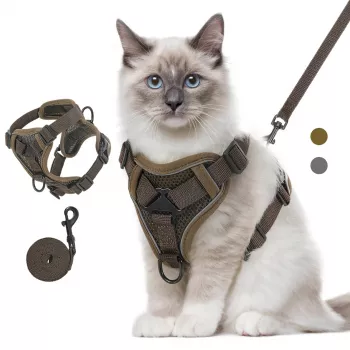
A well-fitted vest harness can make daily walks calmer and safer by distributing pressure across the chest and shoulders instead of the neck. The right vest-style design helps many dogs feel more secure, especially in busy areas, while giving you a steady point of contact for guidance. Below are practical tips on what to look for in a soft, secure vest harness, how to measure and fit it correctly, and how to use the included leash for better control without sacrificing comfort.
Collars are convenient, but they concentrate force at the throat when a dog surges forward. A vest-style harness spreads pressure across a broader surface, which can feel gentler for everyday walking and easier to manage when distractions pop up.
For measuring guidance and fit basics, the American Kennel Club (AKC) has helpful general resources, and welfare-focused walking equipment guidance is also available from the RSPCA.
Not all vest harnesses are built the same. Comfort comes from a combination of materials, shape, and how easily the harness can be adjusted to match your dog’s body.
| Feature | Why it matters | What to look for |
|---|---|---|
| Soft contact surfaces | Reduces chafing and irritation | Smooth lining, padded edges, no rough seams |
| Adjustability | Prevents slipping and improves comfort | Neck + chest adjustments; easy-to-use sliders |
| Escape resistance | Keeps dogs from backing out | Snug fit behind the front legs; stable vest body |
| Durable hardware | Improves safety during pulling | Strong buckles, reinforced stitching, solid D-ring |
| Breathability | Helps avoid overheating | Mesh panels or breathable fabric |
Accurate measuring is the difference between “comfortable support” and “constant readjustment.” Use a soft measuring tape and measure when your dog is standing naturally.
If your dog has a deep chest, broad shoulders, or a fluffy seasonal coat, prioritize adjustability so the harness can be fine-tuned rather than “close enough.”
Plan your first fitting when your dog is relaxed. A calm start helps the harness feel routine, not like a wrestling match.
Reward-based training basics are widely supported by animal welfare organizations like the ASPCA. Even a few minutes of consistency per walk can reshape habits over time.
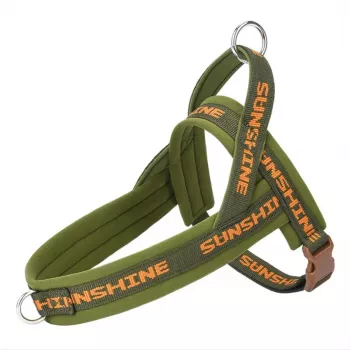
If comfort and stability are top priorities, a vest-style design with adjustability and a matching leash can simplify daily routines. The Adjustable Dog Vest Harness with Leash – Soft, Secure & Comfortable Fit is designed to support a secure feel during routine walks while helping distribute pressure more evenly across the body.
| Item | Details |
|---|---|
| Product | Adjustable Dog Vest Harness with Leash – Soft, Secure & Comfortable Fit |
| Price | 31.51 USD |
| Availability | In stock |
| Best for | Everyday walking comfort, secure handling, adjustable fit |
Use the two-finger rule: you should be able to slide two fingers under the harness without forcing it, and it should stay stable when your dog turns or sits. Check that nothing pinches at the armpits, then re-check the fit after a short walk in case the harness settles or shifts.
A harness can improve comfort and give you better leverage, but it won’t automatically teach loose-leash walking. Pair it with reward-based training, frequent praise for slack leash moments, and direction changes instead of maintaining constant tension.
Start with correct sizing and careful strap adjustment so the chest panel stays centered and the edges don’t rub behind the front legs. Keep the harness clean (grit and hair buildup can cause friction), and watch for redness in high-friction areas so you can adjust fit before irritation worsens.











Leave a comment